

















Change for Progress: Will India Pass or Fail This Decade’s Zero-Emission Test?

India’s electric vehicle (EV) progress in comparison to the 2030 targets reflects a narrative where ambition currently surpasses execution. A reality check in 2025 has highlighted the need to assess where India stands and what actions are necessary as we reach a critical crossroads in this decade.
India’s electric mobility plan is racing against time. With only half of the required charging infrastructure established and battery supply chains facing disruptions due to rare earth material shortages in China, the next five years will determine whether EVs remain a niche market or become the norm.
The government aims for 80% electrification of two- and three-wheelers, 40% for buses, and 30% for private cars through zero-emission technologies. These targets are not merely climate objectives; they are essential indicators of the country’s capability to implement clean mobility solutions amid significant challenges related to the economy, infrastructure, and policy.
The current progress, as detailed in EV Story’s “Change for Progress” series, presents a mixed picture. India’s 2030 zero-emission targets are not just climate milestones—they are essential benchmarks for whether the country can transition its green ambitions into lasting changes.
India’s 2030 zero-emission targets face a challenge that extends beyond the slow adoption of EVs; there is a significant risk associated with the supply of rare earths and battery minerals that power them. Without reliable access to lithium, cobalt, nickel, and the magnets used in electric motors, the green transition may stall before it can gain momentum. This situation is not just a climate challenge—it is a stress test of the supply chain with considerable geopolitical implications.
India has pledged that by 2030, 80% of two- and three-wheelers, 40% of buses, and 30% of private cars will be powered by zero-emission technologies. The success of these numbers will determine whether the EV revolution is perceived as a pivotal moment or merely a false start. At present, the scoreboard reflects a mixed result; rapid adoption in some areas is counterbalanced by regions where ambition still exceeds execution.
 Passenger EVs: From Premium Niche to Mass Adoption
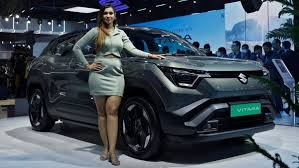
Passenger EV adoption remains low, accounting for about 2% of sales and concentrated among a few manufacturers like Tata Motors and MG. To achieve the goal of 30% adoption, it is crucial to introduce affordable models priced under ₹10 lakh, supported by domestic battery production and stronger incentives, such as those potentially provided under the FAME 3 scheme. Without addressing affordability and localizing the supply chain, mass-market penetration is likely to remain sluggish.
The real turning point for progress will arrive when affordable passenger EVs priced below ₹10 lakh are widely available, bolstered by domestic battery production and enhanced incentives under the anticipated FAME 3 initiative. If this does not happen, the goal of 30% adoption by 2030 may remain aspirational.
Meeting the 2030 milestones requires a significant shift: increased FAME 3 incentives, the launch of mass-market EVs, and domestic cell manufacturing to lower costs. If these objectives are achieved, three out of every ten new cars could be electric, with affordable models leading the demand in tier-2 and tier-3 cities.
Electric Two-Wheelers: The Urban Default
Two-wheelers, once leaders in India’s EV journey, are now experiencing slowed growth due to reductions in subsidies and limited reach in rural areas. To achieve the target of a 60% market share, stable policies, an expanded dealership network, and widespread battery swapping are essential. Companies like Ola Electric, Ather, and TVS are still leading the market, but challenges such as financing gaps and weak rural penetration hinder wider adoption. Achieving a 60% share by 2030 requires stability in policy, predictable incentives, scalable battery swapping, and broader reach into rural communities. By 2030, electric two-wheelers should dominate the market, becoming the preferred choice for urban commuters while steadily gaining traction in smaller towns.
Electric Three-Wheelers: From Quantity to Quality
The three-wheeler segment has seen notable success, with over half of new registrations already being electric, driven by low costs and quick payback periods. However, concerns remain regarding the lack of formal financing and safety standards. E-rickshaws have proven effective for low-cost electrification in last-mile transport, but it is crucial to address issues related to safety, financing for unbanked drivers, and the enhancement of charging infrastructure for future growth. The goal for 2030 is near-total electrification of this segment, supported by formal financing for more than 80% of purchases.
 Electric Buses: Beyond the City Limits
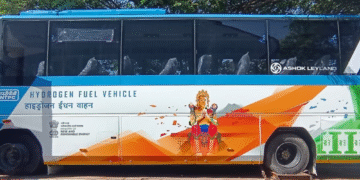
Electric buses (e-buses) represent another area where ambition is outpacing results. Currently, there are only about 8,000 e-buses on the roads, mostly concentrated in urban areas, while deployment under the PM-eBus Sewa initiative is lagging. To reach a target of 100,000 e-buses by 2030, the pace of procurement must accelerate, charging depots need to be built, and intercity routes must be established. Electric trucks are still in pilot phases, comprising less than 1% of fleets, with further progress relying on the development of high-capacity charging corridors, fleet incentives, and indigenous battery technologies that can handle India’s freight demands.
To meet these targets, procurement under PM-eBus Sewa must speed up, and viability gap funding should facilitate the creation of intercity electric coach networks. The ultimate goal is to have over 100,000 e-buses nationwide, connecting and serving various cities.
Electric Trucks: Heavy Lifting Ahead
Electric trucks are still primarily in pilot phases, making up less than 1% of fleets, mainly in city logistics. Progress in this sector relies on the establishment of high-capacity charging corridors, incentives for fleet operators, and investment in domestic battery technology for heavy payloads. The 2030 milestone for electric trucks is modest yet vital, aiming for at least 10% penetration, particularly in urban freight and clean industrial zones.
Charging Infrastructure: From Metro-Centric to Nationwide**
Charging infrastructure is a significant challenge for India. Currently, there are about 12,000 public chargers, which are heavily concentrated in metropolitan areas. To meet the projected demand, approximately 1 million chargers will be needed by 2030. The future of charging will depend on land approvals, interoperability, and participation from the retail sector.
Achieving the target of 1 million chargers by 2030 necessitates equitable distribution to smaller towns, quicker approvals from DISCOMs (Distribution Companies), private retail participation, and standardized connectors and payment systems.
Battery Recycling: Closing the Loop
Recycling is becoming an urgent issue. With less than 5% of EV batteries currently recycled, India faces a potential crisis involving minerals and waste by the late 2020s. Policy-driven extended producer responsibility, the establishment of large-scale recycling plants, and a comprehensive reverse logistics system will be essential to recover 90% of key minerals and reintegrate them into battery production.
As the number of used EV batteries is expected to rise significantly after 2028, India’s recycling capacity is not prepared for this increase. Implementing extended producer responsibility, setting up large recycling facilities, and creating nationwide collection networks are critical steps. Success in these areas could lead to recovering over 90% of essential minerals for domestic battery production.
EV Financing: Level Playing Field
One of the least visible yet most critical challenges is financing. EV buyers across different categories often face higher interest rates and limited lending options. While non-banking financial companies (NBFCs) and fintech firms have stepped in to fill the gap, mainstream financing needs to normalize EV purchases in the same way it has for internal combustion engine (ICE) vehicles. By 2030, EV loans should be as accessible and affordable as those for ICE vehicles, with interest rates below 8% and robust support from mainstream banks. Loan terms must also become comparable, with risk-sharing mechanisms and residual value benchmarks to help lenders feel more secure.
Industry Decarbonization & Urban Transition
Sectors such as steel, cement, and chemicals account for over a quarter of emissions in India. While the transition towards green hydrogen, electrification, and carbon capture is underway, it is currently at a pilot scale. To meet intensity targets by 2030, significant industrial changes must take place within the next three years, leaving little room for delays in policy clarity, financing, and technological adoption.
Cities are on the front lines of air pollution and transportation emissions. Although metro systems and electric bus rollouts have made some progress, unless last-mile connectivity and non-motorized transport options expand, urban transport will continue to hinder overall national efforts. With the acceleration of urbanization, these initiatives must evolve from pilot projects to comprehensive citywide implementations now.
The 2025–2030 Countdown
India’s targets for electric vehicles (EVs) by 2030 are ambitious. As Sudhendu J. Sinha of NITI Aayog has stated, “The next five years will decide whether we lead this transition or follow it.” The Change for Progress scorecard is clear: the crucial measures of success this decade will be determined by execution, not just announcements, pilot projects, or promises.
With only five years remaining, the country must turn incremental improvements into systemic transformations or risk missing out on an opportunity that could shape its economic, environmental, and geopolitical future.
India’s 2030 evaluation will not focus on intentions but on tangible results. This includes megawatt-hours installed, the number of EVs on the road, green hydrogen plants commissioned, forests protected, and reductions in emissions intensity. The nation’s green ambitions could serve as evidence that emerging economies can lead in the climate fight, or they could become a cautionary tale of intentions lost to inaction.