

















Bangalore/Kochi, August 1, 2025: South India is leading the charge in the electric two-wheeler (e2W) market, with Kerala having a 12.9% penetration rate, nearly three times that of Delhi. Karnataka is also emerging as a premium electric scooter hub, according to Crisil’s most recent report, “Electric Two-Wheeler Industry in India Charging Up Fast.”

The report highlights a significant shift in consumer behaviour: 88% of e-scooter sales nationwide now fall into the executive (priced ₹1–1.4 lakh) and premium (priced ₹1.4 lakh and above) segments, an increase from 74% just a year ago. Southern states are driving this market shift, fueled by affluent urban consumers and strong product launches from companies like Ather Energy, TVS Motor, and Bajaj Auto.

“The market is no longer solely dependent on subsidies. Consumers now evaluate electric vehicles (EVs) based on performance, range, design, and after-sales support, similar to their considerations for internal combustion vehicles,” explains Hemal N. Thakkar, Senior Practice Leader and Director at Crisil Intelligence.
Affluence Drives a New Kind of Buyer
In Kerala and Karnataka, scooters are increasingly seen as lifestyle upgrades rather than merely low-cost mobility options. Affluent professionals in the IT and service sectors are prioritising features such as connected technology, fast charging, and ride comfort over cost.
“Our southern customers care less about upfront rebates and more about features, connectivity, smart navigation, OTA updates, and ride comfort,” states a top official at Bengaluru-based Ather Energy, whose models priced above ₹1.4 lakh are leading the segment.
Buyers echo this sentiment. “I hardly thought about the subsidy,” says Rajlaxmi Iyer, an IT professional from Kochi who recently upgraded her scooter. “I wanted a vehicle that felt futuristic—quick charging, app connectivity, and a stylish design. For us, the premium is worth it.”
Subsidies Still Matter, But Less Than Before
While subsidies continue to play a role in improving total cost of ownership (TCO), Crisil estimates that for riders covering 8,000 kilometres each year, e-scooters are 52% cheaper to operate than petrol equivalents. However, the report notes that buying decisions in the South are now driven more by perceived value, brand reputation, and features rather than by government incentives.
Despite the long-term cost advantages, initial prices for e-scooters remain high, costing about 57% more than similar petrol two-wheelers—a gap that manufacturers are attempting to bridge with product innovations and new pricing models.
How OEMs Are Responding
Established players such as TVS Motor and Bajaj Auto are leveraging their extensive dealer networks to capture the executive segment, while newer companies like Ather Energy are setting the standard in the premium sector. Ola Electric continues to dominate sales in the mass-market segment.
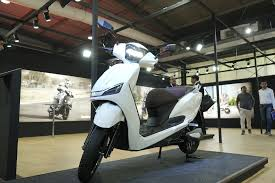
Manufacturers are also transforming the buying experience. Innovative experience centres and digital showrooms have expanded beyond metropolitan areas, offering tech-heavy features like over-the-air updates, predictive diagnostics, and app-driven navigation to everyday buyers.
“The conversation today rarely revolves around price,” says a TVS dealer in Bangalore’s Jayanagar district. “Instead, it’s about the technology: what tech features do I get? How quickly can I charge? What kind of after-sales support is available? People understand that EV running costs are lower—they’re willing to pay more for comfort and connectivity.”
Closing the Price Gap
Battery-as-a-Service (BaaS) is a promising innovation that allows buyers to buy scooters without the battery, which is typically the most expensive component, and then pay a subscription to access it. Crisil predicts that such models will bring e-scooter prices in line with those of petrol vehicles over the next decade, even as subsidies are reduced.
Companies are also exploring battery swapping, modular vehicle designs, and new after-sales formats to lower entry barriers for cautious buyers.
The North-South Divide
While Kerala and Karnataka are thriving, northern and eastern states lag, with e-scooter penetration rates below 5% and sub-₹1 lakh models dominating sales. In these areas, affordability takes precedence over aspiration, and government incentives remain a key driver of adoption.

However, Crisil anticipates that this trend will change. Nationwide e2W sales have soared from 28,000 units in 2019 to over 1.1 million expected by 2025, and penetration is projected to triple by 2030, bringing more regions in line with the aspirational, premium-led model seen in the South. What trends are emerging in the South today could well set the stage for the North tomorrow.
The Bigger Picture
“What we’re witnessing in the South is the forefront of India’s e-mobility transformation,” remarks Thakkar. “Once the thinking around total cost of ownership and product appeal takes hold, others will follow. Currently, southern buyers are shaping the new narrative.”
If subsidies were once the driving force behind India’s electric revolution, today it is being propelled by software-driven features, advanced battery technology, and a new class of aspirational consumers. The country may be on many different paths, but the spirit that propels India forward is electrifying, ambitious, and, more than ever, premium.