














NEW DELHI, 28th July 2025: The Firodias’ journey to electric vehicle (EV) dominance begins at home. Nearly three decades after the Kinetic Honda DX became a household name, Abhay Firodia has revived the “DX,” this time as an electric scooter, entering a market dominated by his sister, Sullajja Firodia Motwani, runs a well-oiled Kinetic Green that specialises in electric two- and three-wheelers.

Kinetic vs. Kinetic:
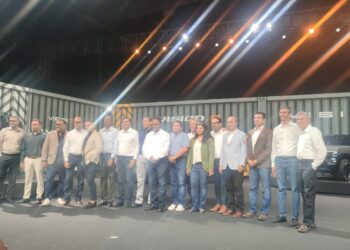
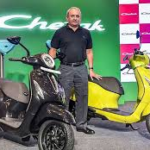
The Firodia Siblings’ EV Scooter Battle has begun on India’s roads, with Sullaja’s brother, Ajinkya Firodia, introducing the Kinetic DX today in New Delhi. For the first time, two branches of the Firodia family are competing in the same segment, electric scooters, but with vastly different strategies.
Kinetic Engineering, led by Ajinkya Firodia, believes that nostalgia and premium features will appeal to urban buyers, as evidenced by the retro-looking Kinetic Honda-inspired Dx that debuted today. One approach promotes a lifestyle, whereas Sullajja’s Kinetic Green focuses on affordability, scale, and last-mile mobility solutions for a larger mass market and fleet operators as a practical solution


Sibling Strategies: Same Destination? Two Scooters; Two Philosophies

Despite sharing a brand name, the Kinetic DX and Kinetic Green scooters appeal to very different buyers.
The DX and DX+, priced at ₹1.11 lakh and ₹1.17 lakh (ex-showroom), emphasise performance and premium features, including a top speed of 90 km/h, cruise control, hill-hold assist, geo-fencing, and a tech-heavy cockpit, all wrapped in the familiar shape of the beloved 1990s Kinetic Honda DX. Its upright stance, reminiscent of the days when entire Indian families rode on a single scooter, now conceals a 2.6 kWh LFP battery capable of a range of up to 116 kilometres. With an initial production limit of 35,000 units, Abhay clearly targets urban individual commuters seeking a blend of heritage and modernity.

Kinetic Green provides scooters in the ₹70,000-1 lakh price range, with range options of 80 to 120 km, aimed at cost-conscious buyers and fleet operators in tier-2 and tier-3 cities. While it lacks the DX’s flashy connected features, its value-driven positioning, battery-swapping partnerships, and extensive dealer network make it a viable option for widespread adoption.
In short, if the DX is an aspirational scooter for urban commuters, the Kinetic Green is a practical solution for transporting people and goods at a reasonable cost.
How The Split Happened


The Firodias’ divergent paths date back to the early 2000s, following the termination of Kinetic’s celebrated joint venture with Honda, which introduced India to its first gearless scooters. Abhay retained Kinetic Engineering and focused on automotive components and commercial vehicles through Force Motors, while Sullajja founded Kinetic Green in 2015 as a separate venture to promote clean mobility. Over the last decade, she has established Kinetic Green as a key player in the EV ecosystem, producing two and three-wheelers and forming partnerships in battery swapping and green technology.

Stakes for Kinetic
Reviving the DX is more than just selling scooters; it is a strategic move to position Kinetic as a serious competitor in India’s electric two-wheeler market. The Pune-based company, which produced and sold the iconic Kinetic DX scooter from 1984 to 1998, now plans to become a leader in the electric two-wheeler segment within the next three years. Ajinkya Firodia has set an ambitious sales target of 1.5 lakh units over the next three to four years, which will be supported by an increase in production from 40,000 units by August 2026 to gradually higher volumes thereafter.
“To achieve that number, we will need approximately 300 dealerships,” Firodia stated. The company has currently appointed 20 dealers and plans to increase that number to 160 in the first year and to reach 300 over the next three years. The western region will be prioritised first, followed by India’s north, east, and south. Firodia emphasised the importance of having a reliable brand and providing excellent service for long-term success in the market.
Bigger Battlefield
With the DX, the Firodia siblings’ rivalry brings a significant legacy player into a market reshaped by brands such as Bajaj, TVS, and Hero. The electric scooter space, which was once dominated by startups like Ather and Ola, is quickly evolving into a competitive arena for established automotive companies looking to reclaim ground. Kinetic, a brand that once defined India’s scooter culture, isn’t just looking to increase market share; it’s also proving that it still belongs in the two-wheeler conversation. The Firodia siblings’ family rivalry is now playing out on Indian roads.