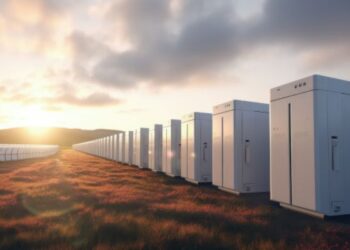






















New Delhi, June 4, 2025: In anticipation of India Energy Storage Week (IESW), which will be held in New Delhi from July 8 to 11, The India Energy Storage Alliance (IESA) has submitted a comprehensive set of rules and regulations to the government to expedite the adoption of storage technologies essential to the nation’s energy transition.


Government representatives, international energy companies, and technology developers from more than 20 nations are anticipated to attend the event.
Energy storage is emerging as a critical enabler for grid reliability and decarbonisation as India strives to meet its goal of obtaining 50% of its electricity from renewable sources by 2030. The International Energy Agency predicts that by 2040, India will account for almost 40% of the world’s incremental energy demand.

According to Vinayak Walimbe, Managing Director of Customised Energy Solutions, “IESA’s proposed framework is a critical step in addressing the regulatory, technical, and market gaps hindering large-scale storage deployment.”
In order to evaluate India’s short- and long-term access to vital raw materials like cobalt and lithium, the proposal urges the government to start a material security study. The Alliance cautions that if proactive planning is not implemented, global supply chain disruptions could sabotage energy transition initiatives.
Additionally, the framework calls for a more robust integration of storage into grid planning at the state and federal levels. To better balance grid variability, IESA advises the Central Electricity Authority and Forum of Regulators to spearhead coordinated efforts between state utilities and transmission operators.
Establishing standards for the reuse and recycling of second-life batteries is another important component of the proposal. Experts in the field believe that reusing electric car batteries for stationary storage is an economical and environmentally friendly solution.
At the same time, IESA is advocating for changes in the undeveloped ancillary services sector in India. In order to encourage investment in high-performance storage solutions, it proposes tying payments to performance metrics like sub-second response times, drawing on models from nations like the U.K.

Along with a compliance framework for energy storage obligations, the Alliance also demands reduced import duties, a reduction in GST, and technical guidelines specifically designed for India’s tropical climate.
According to IESA President Debmalya Sen, “India has a unique opportunity to leapfrog in clean energy deployment.” “A robust policy ecosystem can turn that opportunity into economic and environmental gains.” he further added