















July was a mixed month for India’s electric vehicle (EV) market, ending the month showing strong gains in passenger cars and three-wheelers, while sales of two-wheelers and buses slowed, reflecting the evolving dynamics of the country’s rapidly changing EV landscape.


According to the latest EV Sales Digest from JMK Research, total EV registrations reached 188,602 units across 35 states and Union Territories, up from 180,035 in June. Passenger electric cars were the leading growth drivers, more than doubling their sales year-on-year, while three-wheelers continued to demonstrate steady growth. In contrast, high-speed electric two-wheelers, which remain the largest segment by volume, showed signs of stagnation, and electric bus sales declined due to delayed state procurement processes.
“This divergence illustrates the complex dynamics of India’s EV transition,” said a senior industry analyst, stating that “Cars and three-wheelers are gaining acceptance in private and commercial sectors, but two-wheelers remain highly price-sensitive, while buses are impacted by prolonged procurement cycles.”
Cars Surge, Tata Extends Lead
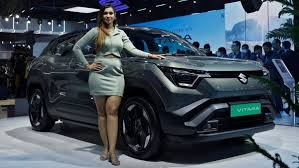
Passenger electric cars were the standout performers in July, with sales of 15,293 units—an increase of 17% month-on-month and an impressive 104% year-on-year. This segment has benefited from aggressive pricing, a wider range of available models, and state-level incentives.

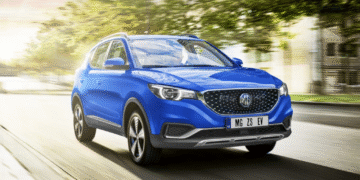
Tata Motors maintained its commanding lead with a 39% market share, driven by demand for its Nexon EV and Punch EV. MG Motor followed with a 33% share, thanks to its ZS EV and Comet models, while Mahindra & Mahindra climbed to an 18% share with its vehicles, including the newly launched BE.05.
“The e-car market is now much more competitive than a year ago,” another analyst said, stating that. “Tata continues to dominate, but MG is emerging as a strong alternative, and Mahindra is starting to gain traction with its updated portfolio.” The analyst added
Three-Wheelers: The Workhorse of India’s EV Adoption
Passenger electric three-wheelers (E3Ws) maintained their upward trend, registering 60,241 units in July—a 17% increase month-on-month and an 8% increase year-on-year. Mahindra led this segment with a 15% share, followed by Bajaj Auto at 12% and YC Electric at 5%.
The cargo three-wheeler market grew at a slower pace, inching up 0.5% from June to 8,905 units, but still marked a 14% rise over the previous year.
“The three-wheeler category is the workhorse of India’s EV transition,” said an independent EV consultant. “It’s where electrification presents the clearest economic advantages—in segments like ride-hailing, last-mile delivery, and intra-city cargo transport. The payback period is short, and operators are responding positively.”
Two-Wheelers: Ola Stumbles as Incumbents Fight Back

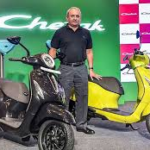
High-speed electric two-wheelers—defined as having top speeds over 25 km/h—saw sales of 102,865 units, a 2% drop from June. While this segment is still the largest by volume, the decline underscores shifting market dynamics.
TVS led with a 21.6% market share, followed by Bajaj Auto at 19.1% and Ola Electric at 17.3%. Ola’s market share has dropped significantly—from 39% in July 2022 to just 17% a year later—as established players regain market territory with broader product offerings, competitive pricing, and dealership-based service models.
“Ola’s decline highlights how quickly this market is maturing,” Kaul commented. “Consumers are placing higher value on after-sales support, range reliability, and brand trust—areas where traditional manufacturers like TVS and Bajaj excel,” said an analyst from a leading broking house.
Hero MotoCorp and Ather Energy rounded out the top five with market shares of 10.2% and 15.8%, respectively, while companies like Greaves/Ampere and River Mobility remain niche players.
Electric Buses: Sales Decline Due to Procurement Delays
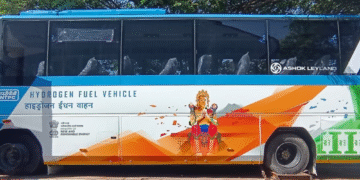
Electric bus sales fell sharply to 365 units in July, a 31% decrease month-on-month and a 16% decline compared to the previous year. Industry analysts attribute this slump to delays in order execution under state transport undertakings (STUs).
JBM Auto maintained its leadership in this segment with a 41% share, followed by Olectra Greentech at 24% and PMI Electro at 13%.
“The decline in e-bus sales is more about policy lag than actual demand,” Kaul explained. “Once the National Electric Bus Program orders start moving forward, we expect sales volumes to rebound.”
State-Wise Trends: UP Tops, Southern States Gain
Uttar Pradesh led EV registrations with 18.2% of the total in July, followed by Maharashtra at 10.8%, Karnataka at 8.2%, and Tamil Nadu at 7.4%. Increasing adoption in states like Kerala, Assam, and Bihar indicates that electrification is spreading beyond India’s metropolitan areas.
Outlook: Festive Tailwinds and Policy Triggers
Despite stagnation in two-wheeler sales and the decline of bus sales, overall EV registrations grew from June levels, demonstrating the sector’s resilience.
Analysts expect the festive season to provide a boost for both two-wheeler and four-wheeler sales. The industry is also awaiting clarity on the FAME-III subsidy framework and additional state-level incentives, which could catalyse pent-up demand.
“July’s numbers reinforce that India’s EV journey isn’t linear,” Mishra said. “But the fundamentals — rising consumer interest, improving infrastructure, and competitive products — remain strong. We expect the market to grow in double digits in FY26.” The broking house analyst said.